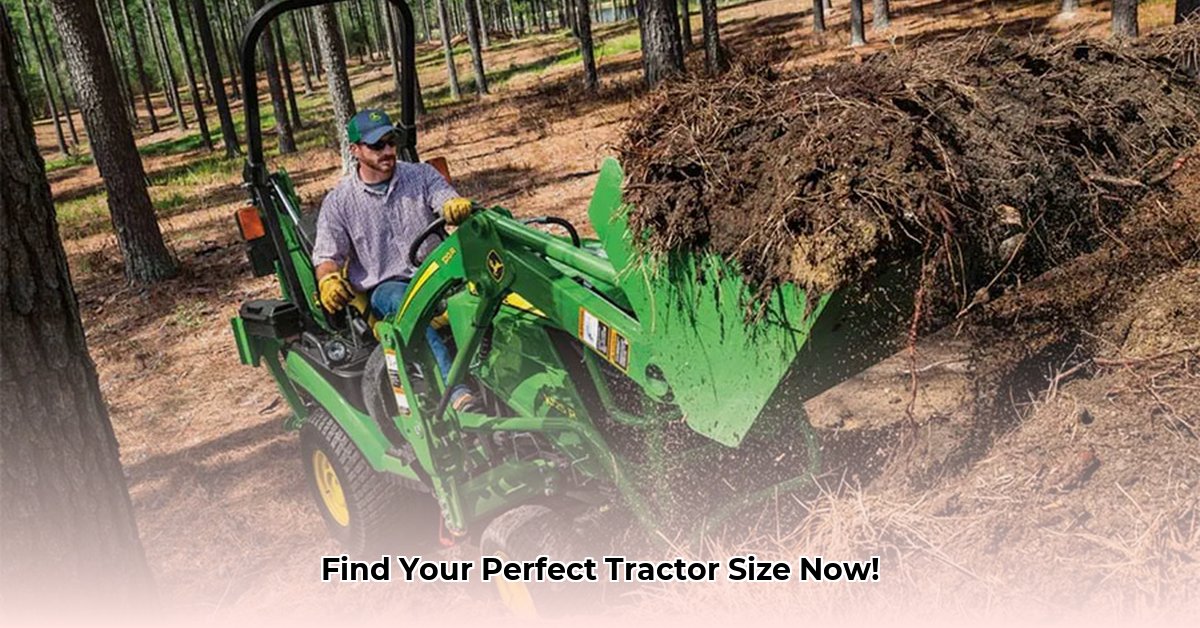
Choosing the right tractor is a crucial decision for any farmer, particularly those committed to sustainable agriculture. A poorly chosen tractor can lead to wasted fuel, reduced efficiency, and increased costs, undermining your sustainability goals. This guide provides a step-by-step process to help you select the ideal tractor for your needs. For help determining the right size, use this tractor size calculator.
Sizing Up Your Operation: Farm Size and Tasks
The first step in determining tractor size is assessing your farm's characteristics. Farm size is the most significant factor; a small plot (under 5 acres) requires a much smaller tractor than a large operation (20+ acres). Consider the following:
- Acreage: This directly influences the horsepower you need.
- Crop types: Different crops demand different levels of power for planting, cultivating, and harvesting.
- Tillage practices: No-till farming generally requires less horsepower than conventional plowing.
- Soil type: Heavy clay soils require more power than lighter, sandier soils.
- Other tasks: Will you need a front-end loader for material handling or other implements?
Tractor Types: The Right Tool for the Job
Several tractor types cater to various farm sizes and operations:
Sub-compact/Garden Tractors: Ideal for small farms and gardens, these are highly maneuverable and fuel-efficient (think of them as the compact cars of the tractor world).
Compact Utility Tractors (CUTs): Versatile all-rounders suitable for medium-sized farms, handling various tasks (similar to SUVs in their adaptability).
Utility Tractors: Heavyweights designed for large farms and demanding tasks, capable of handling extensive acreage and heavy loads. However, they come with higher costs and maintenance (think of these as the pickup trucks of the tractor world).
Specialty Tractors: These are designed for specific tasks (e.g., vineyard work or orchard maintenance).
Beyond Horsepower: Sustainability Considerations
While horsepower is essential, sustainable farming requires a broader perspective. Consider:
Fuel Efficiency: Lower fuel consumption translates to cost savings and reduced environmental impact. Explore options like biodiesel or electric tractors. "Choosing a fuel-efficient tractor can save you up to 20% on fuel costs annually," says Dr. Emily Carter, Agricultural Engineering Professor at State University.
Environmental Impact: Prioritize tractors that minimize soil disturbance, align with reduced tillage methods, and have environmentally responsible manufacturing and disposal processes. Smaller tractors often have a smaller environmental footprint.
Budget: Balance initial cost with ongoing fuel, maintenance, and repair expenses. Smaller tractors typically have lower initial costs, but larger ones might prove more efficient long-term depending on operation size. A well-maintained, appropriately sized tractor can last for 15-20 years, significantly impacting the total cost of ownership.
Finding Your Ideal Tractor: A Step-by-Step Guide
Assess Your Needs: Thoroughly evaluate your farm's size, soil type, crops, and typical tasks.
Research Tractor Types: Explore the options discussed above to identify suitable candidates.
Determine Horsepower Needs: Consult manufacturer recommendations and resources, remembering that more horsepower isn't always better. Match the horsepower to your farm's needs.
Prioritize Sustainability: Focus on fuel efficiency, environmental impact, and cost-effectiveness throughout the comparison process.
Seek Expert Opinions: Consult other farmers, agricultural equipment dealers, or agricultural extension agents for guidance.
Compare Total Cost of Ownership (TCO): Consider purchase price, fuel, maintenance, and repairs over the tractor's lifespan.
Make Your Informed Decision: Choose the tractor that best aligns with your budget, farm needs, and sustainable goals.
Real-World Examples: Sustainable Farming Success
Many farmers successfully integrate sustainable practices with smart tractor choices. Small organic farms may use sub-compact tractors with precision technologies to maximize resource use and minimize environmental impact. Larger farms may utilize utility tractors running on alternative fuels or optimized for reduced tillage.
The Bottom Line: Your Sustainable Tractor Awaits
Selecting the right tractor size is highly dependent upon the unique characteristics of your farm. By carefully considering your needs, conducting thorough research, and prioritizing sustainability, you can choose a tractor that supports your long-term farming goals and minimizes environmental impact. Remember, it's a significant long-term investment, so deliberate planning will pay off.